Detta blir främst också ett ”samlat inlägg”
The 7 Levels of Watch Movements (And Why Most Collectors Get It Wrong)
Every Watch Complications Explained in 13 Minutes
Watch Movements: Difference Between Quartz, Mechanical & Automatic
21 februari, 2011
Dagens Urverk : Quartz…
18 december, 2010
Dagens Rolex-Lektion : Rolex OysterQuartz Datejust
13 april, 2021
Dagens Urverk : Schweiziska vs Japanska Urverk – Vilka är bäst?
22 januari, 2012
Dagens Urverk : ETA / Valjoux 7750
12 februari, 2012
Guide till olika klock-urverk för nybörjare
Quartz vs. Mechanical vs. Automatic: Which Watch Movement Should YOU Choose? | WatchObsession
15 december, 2012
Klockmanualer : Hur ställer man en klocka?
4 oktober, 2010
Vad är en Winder?
4 oktober, 2017
Behöver du ha en Winder till din Klocka?
12 juni, 2017
Guide : Hur du skruvar upp ett manuellt / automatiskt urverk
3 november, 2011
Vad är en Kronograf?
13 september, 2010
Tourbillon Urverk, Vad är det?
28 februari, 2026
Varför vill man ha en mekanisk klocka?
How A Mechanical Watch Works – Explained Simply In 3D – How A Watch Works – Atelier DE GRIFF
How a Mechanical Watch Works
How a Mechanical Watch Works | Explained in 5 Minutes
Best Watch Movement – Expert Guide to Choosing the Right One
Different Types of Watch Movements


Watch Movement Types Explained
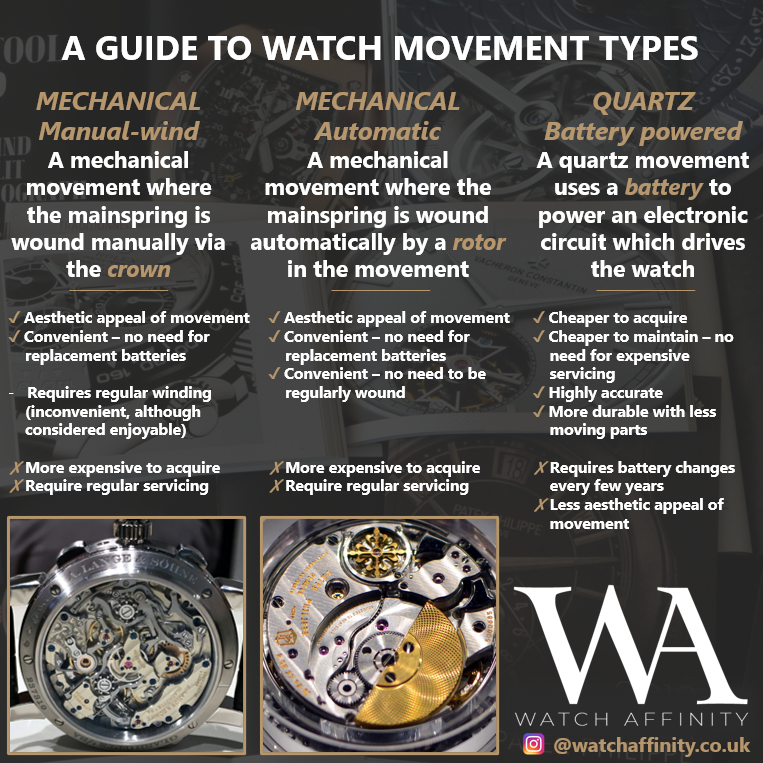
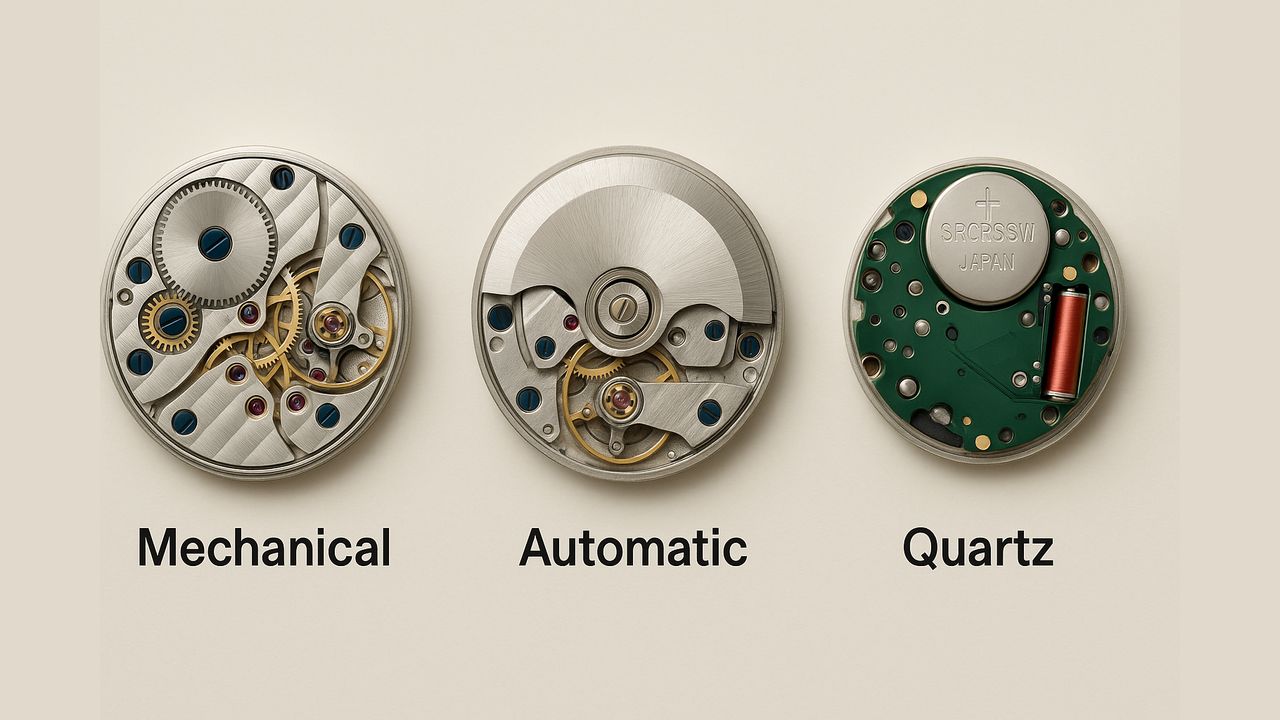
Mechanical Watch Movements (Manual Wind)
How it works: Powered by a manually wound mainspring, mechanical movements use a series of gears, an escapement, and a balance wheel to keep time.
Pros:
- No batteries needed
- Loved for heritage, craftsmanship, and artistry
- Smooth sweeping second hand
Cons:
- Must be wound regularly
- Less accurate than quartz (+/- 20-30 seconds /day)
- Higher maintenance cost
Best For:
Traditionalists, collectors, and horology enthusiasts who admire fine watchmaking.
Automatic Watch Movements (Self-Winding)
How it works: A type of mechanical movement that winds itself via a rotor that spins with wrist motion.
Pros:
- No daily winding if worn regularly
- Offers smooth, continous hand movement
- Long-lasting with proper care
Cons:
- Less accurate than quartz (+/- 15–25 seconds/day)
- Can stop if not worn for a few days
- Slightly thicker due to the rotor
Quartz Watch Movements
How it works: A small battery sends electricity through a quartz crystal, creating vibrations that drive the movement and keep incredibly precise time.
Pros:
- Extremely accurate (+/- 10–15 seconds/month)
- Minimal maintenance (battery lasts 2–5 years)
- Affordable and reliable
Cons:
- Requires occasional battery replacement
- Lacks the mechanical artistry
- Ticking second hand may feel less refined
Best For:
Practical buyers looking for precision, reliability, and low maintenance.
Explore Quartz Watches
Pros:
- Eco-friendly (no regular battery swaps)
- Long power reserve
- Quartz-level accuracy
Cons:
- More expensive than regular quartz
- Fewer models on the market
Best For:
Eco-conscious, tech-savvy, or maintenance-averse users.
Brands to Explore: Seiko, Citizen, Casio Edifice
Watch Movement Comparison Table
|
Movement Type |
Power Source |
Accuracy |
Maintenance |
Best For |
|---|---|---|---|---|
|
Mechanical (Manual) |
Hand-wound mainspring |
+/- 20–30 sec/day |
Daily winding, 5-year service |
Collectors, traditionalists |
|
Automatic (Mechanical) |
Wrist motion + rotor |
+/- 15–25 sec/day |
Wear regularly, 5-year service |
Daily wearers who value tradition |
|
Quartz |
Battery + quartz crystal |
+/- 10–15 sec/month |
Battery every 2–5 years |
Accuracy seekers, frequent travelers |
|
Hybrid (Kinetic/Solar) |
Motion or light powered |
+/- 10–15 sec/month |
Capacitor/cell, long-lasting |
Eco-conscious, innovation-driven |
Which Type Of Watch Movement Is Right for You?
Your perfect timepiece depends on your lifestyle and values:
- Love craftsmanship & tradition? Choose mechanical or automatic
- Want ultimate accuracy with little effort? Go quartz
- Prefer low-maintenance, eco-friendly tech? Try a hybrid